
Wanting It and Building It Are Not the Same Thing
Why most athlete-founded media companies flatline before they ever build a piece of intellectual property, and what actually separates the ones that last from the ones that were never really companies

Lit On Fire
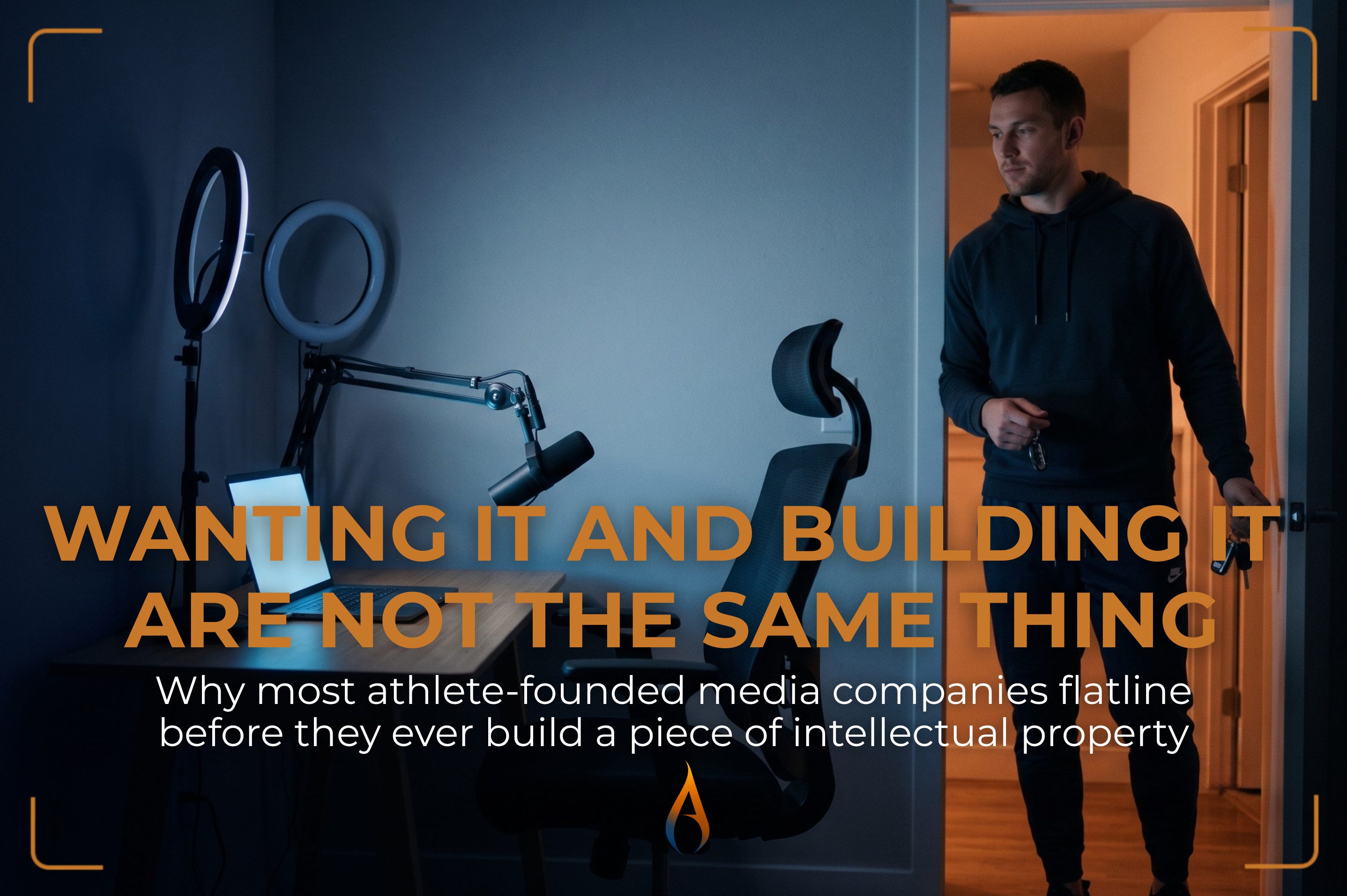
Wanting to build a media company and actually following through with one are not the same thing.
Here is a scene I have lived more than once.
Weeks of work go into a shoot. Scripting, logistics, a crew booked, locations locked, a plan that costs real money to execute, sometimes as much as $10,000 for one day of production, once every line item is added up. Everything is ready to go. And then the athlete has other things pulling at him, another business venture, a trip, a distraction, and because there is nothing tangible the world can see yet, no podcast episode live, no numbers to point to, the whole thing quietly gets lost in the clouds. The shoot goes by the wayside. Nobody “officially” cancels it. It just stops happening and the producer is left holding the bag, aka receipts.
That is wanting to build a media company. It is not the same thing as building one.
If your organization is trying to figure out whether you are actually built for this or just want to be, that is exactly the conversation Afterburn has before anything gets produced. Start at afterburnadvisory.com.
Why This Keeps Happening
Most athletes have no prior experience building a media company, and that is completely understandable. Nobody expects a professional athlete to have run a production business as a side hustle. But there are two specific things I see get in the way, over and over, and neither of them is a lack of talent or a lack of story.
The first is a reluctance to put in real money as first money. Investing your own capital before anyone else is a signal, to investors and to the team you hire, that you are actually in it to win it. Most athletes would rather use their IP, the years of playing and succeeding in a completely different field, to open doors instead. And that approach can work. It often does work. But it is a slow play. It takes a lot of meetings, a lot of explanation, and a lot of building from ground zero on relationships that have nothing to do with the thing you are trying to build. Betting on your name opens doors. It does not build the thing behind the door.
The second is not knowing what actually differentiates the company. I have sat across from athletes who want to start a media company and cannot answer, with any real specificity, what makes theirs different from the ten others that already exist and produce content at a sometimes ridiculously rapid pace. What usually gets pitched instead is a show that looks remarkably like another show, with a slightly different logo and a slightly louder intro, on the theory that ad spend will take care of the rest. The intro music changes. The problem does not. In the film world, you’ll hear some grizzled crew member say, “don’t worry, we’ll get it in post.” For what it’s worth, that’s never an acceptable answer to a director.
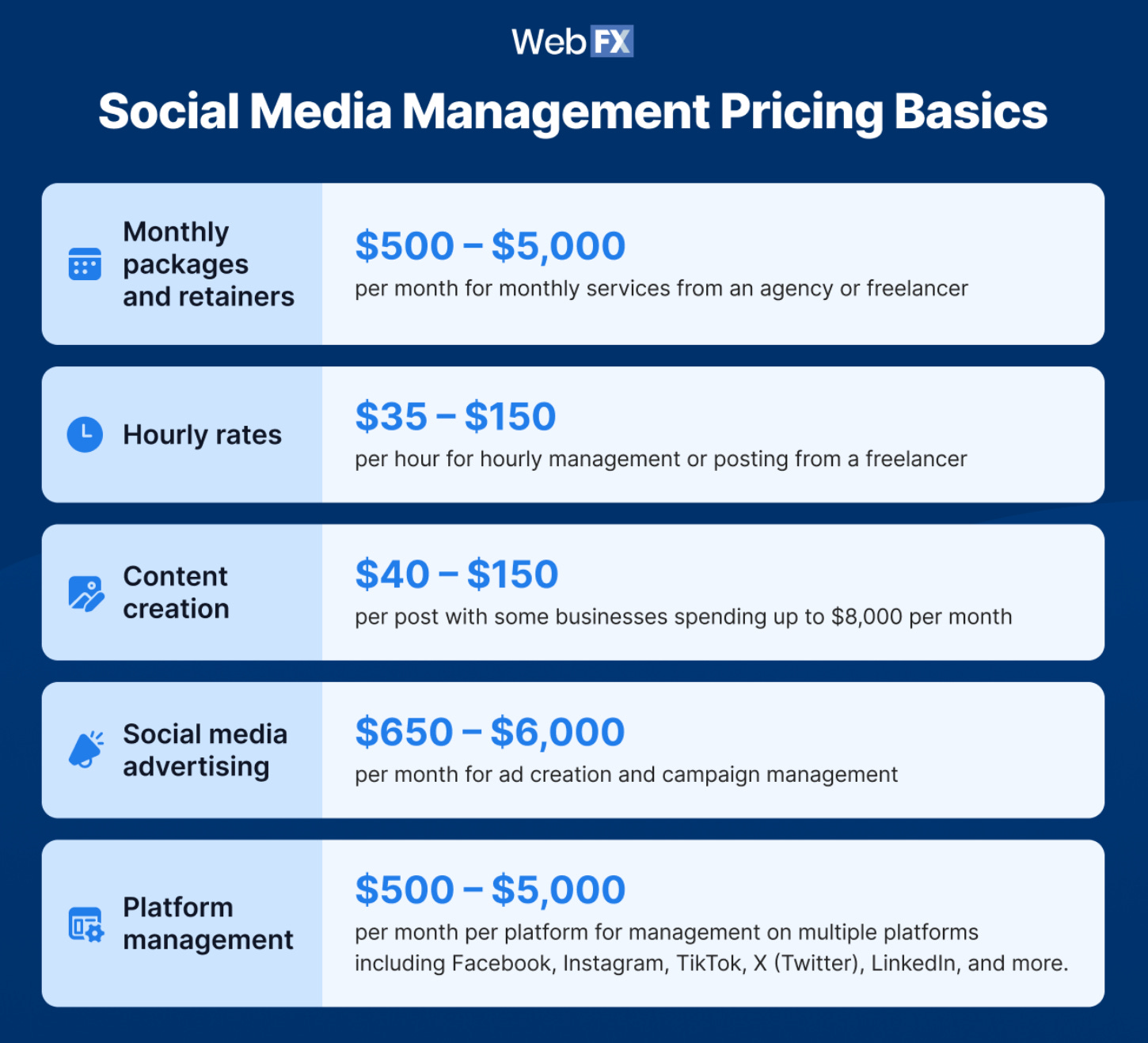
Content creation alone can run $1,000 to $8,000 a month before ad spend is even added, and a full-service operation with production, ads, and platform management can run close to $19,000 a month. That is a real number to sustain on ad spend alone, chasing a format someone else already built. The real question underneath all of it is not whether a slight variation on someone else’s format can get views. It is how sustainable that actually is once the ad budget runs out and the algorithm moves on to the next close copy.
You Hired Me for a Reason
No one can do this alone. You need an experienced team that can craft something from nothing, and once you have that team in place, the job gets significantly harder if every decision gets second-guessed by outside noise.
I have had the uncomfortable conversation more than once, the one where I have to say, as plainly as I can: you hired me for a reason, so let me do my job. There is nothing more unsettling professionally than doing weeks of real work, work you know costs real money, only to watch the plan get lit on fire because interest wandered somewhere else before the thing had a chance to exist.
The crew still gets paid whether the shoot happens or not. Somewhere there is a call sheet for a production day that never came, sitting in an inbox, still technically scheduled.
That is wanting to build a company, not actually following through with one.
The Mistake That Kills It Fastest
If I had to name the single most common mistake, it is this: listening to too many people, all at the same time.
Of course the pitches come. Once there is any visible momentum, everyone wants a piece of the action, and none of those pitches are cheap. The inbox fills up fast. Consultants who have never made anything want to consult on the making of it. Everyone has a friend who can help with distribution. I know a guy, who’s cousin is friends with the head of… None of them were around for the part where the actual work got done.
You have to stay the course with the people who got you there. You can scale as revenue grows and partnerships expand. Trying to do everything at once, because the goal is to be the next big athlete-founded company, is the surest way to lose interest, lose money, and flatline without building a single piece of actual intellectual property.
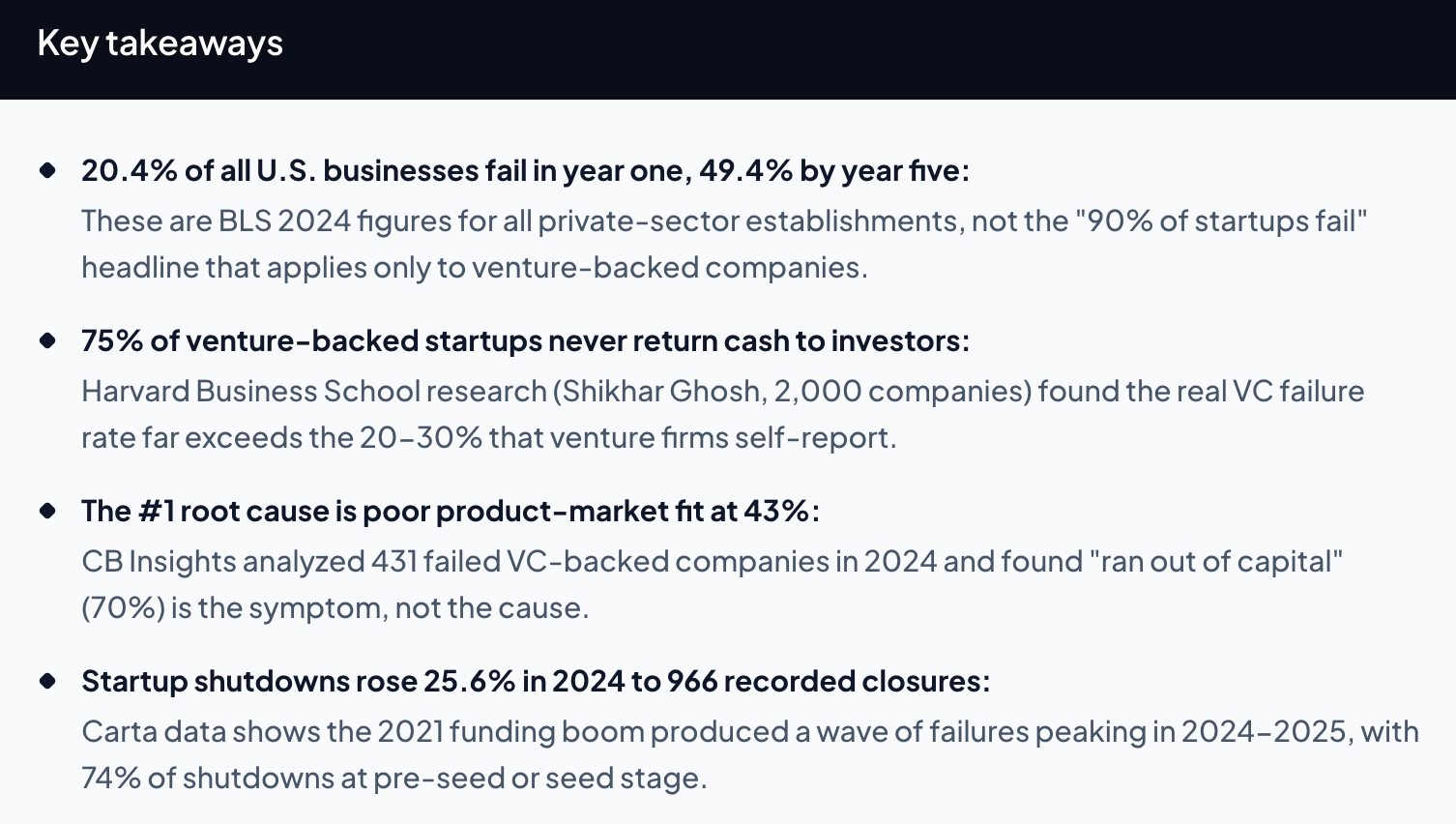
This is not just an athlete problem. It is a company problem generally. Roughly 42 percent of startup failures come down to building something the market never actually needed, and a CB Insights study of 431 failed venture-backed companies found the median time from last fundraise to actual shutdown was 22 months, with nearly a quarter of them “walking dead,” technically alive but not really functioning, for three years or more before officially closing, kind of like The Walking Dead TV show. IYKYK. Chasing every pitch that comes in the door is a fast way to become a statistic.
What Actually Has to Be in Place
So what does a media company actually need before it is a media company and not just a podcast or a bunch of short form inspirational videos?
A real plan of attack. A realistic budget, not one built on favors, and not one built on the assumption that people will work for less because of who you are, with the promise that you will pay up once things take off. Actual assets, or a clear, timely ability to build them with the right experts. A distribution plan specific enough that investors, partners, and the paying public can look at it and understand exactly what you are doing and why.
And underneath all of that, the founder’s story has to be defined. Being a great athlete at one point in your life can get you skip the line to a first meeting. It does not answer the harder question a journalist, a partner, or an investor will eventually ask: what are your pillars of content? Why should the public actually care about this beyond “I grew up watching you play”? If you want media placement, PR, and news cycles to follow what you are building, those questions are coming, and you had better have real answers, or be genuinely apt at improvising your way through them.
Media Is a 162-Game Season
My father has always said consistency is the key to greatness, and nowhere have I seen that proven more consistently than in this business.
Most companies start out like gangbusters. The first few months look great. Then if the numbers are not where the founder hoped, interest wanes, and production drops right along with it.
Running a media company gets compared to managing a sports team often enough, but the comparison that actually holds up is different from the one people usually reach for. In sports, one big play or one shift in momentum can win the game. One game. Media does not work that way. Media is an entire baseball season. A hundred and sixty-two grueling games. You can absolutely rebound from a slow start. But right around the All-Star break, aka the six-month mark, you had better have constructed a genuinely good roster (leads) and be ready for the stretch run (Q4 investor reporting), or there is no playoff appearance and no deep postseason run.
No one gets fired after game four. Plenty of teams have quietly rebuilt the whole roster by game 81 and nobody outside the clubhouse noticed.
And for most startups, unless there was a large initial raise or the founder is prepared to draw on personal reserves, there may not be a second season.
The Line Between Wanting and Building
None of this is a knock on any athlete for not knowing how to build a media company on day one. Nobody expects that. The line is not drawn at experience.
The line is drawn at follow-through. It is drawn at whether the founder is willing to put real capital behind real conviction, whether the team gets trusted to do the job it was hired to do, whether the plan stays the plan when the fifteenth pitch of the month comes in, and whether the roster is built for a full season and not just an opening week.
That is the conversation we have at Afterburn Advisory before a single frame gets produced. Not whether the story is good. Almost every athlete has a story worth telling. The game changer is if the company behind the story is actually built to survive its own season and bring the narrative to completion.
Wanting to build a company and actually following through with one are not the same thing. The difference shows up in month six, not month one.
If you are evaluating whether an idea is a real company or a good story looking for a home, that is the exact conversation to have before the budget gets spent. Start at afterburnadvisory.com/advisory, or see how we build the assets themselves at afterburnadvisory.com/film.